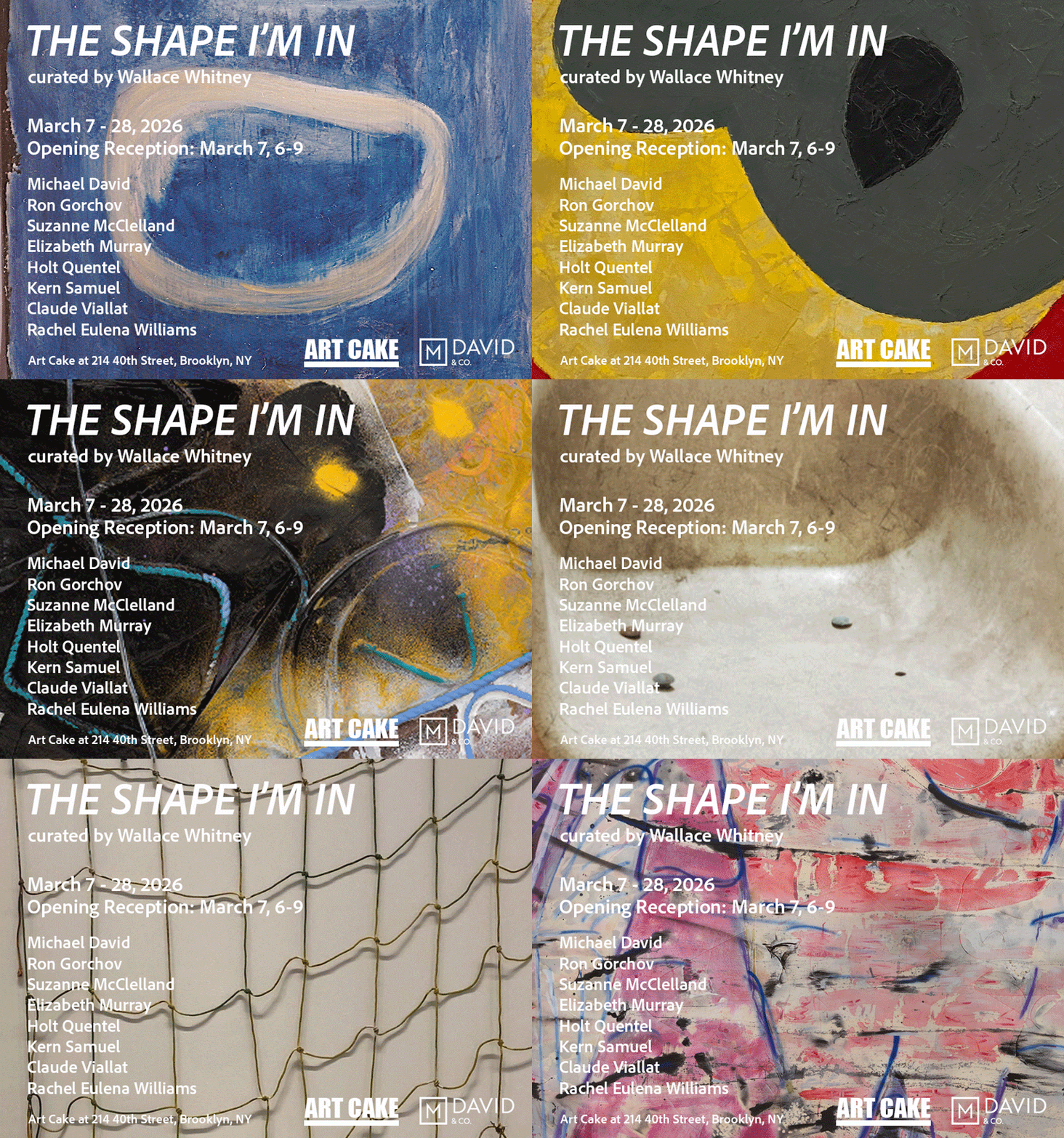
The Shape I’m in
curated by Wallace Whitney
March 7 - March 28, 2026
Opening reception: Saturday, March 7, 6-9 pm
Gallery A
M. David & Co. at Art Cake
214 40th Street, Brooklyn
Hours: Friday & Saturday, 1-6 pm, Sunday 12-5pm and by appointment
"The Shape I’m In connects eight artists involved in abstraction that either accommodates or bends the contours of the world we inhabit. Direct, materially driven and decidedly enthusiastic this group of artists have never been shown together. Whether intuitive in approach or driven by intellectual concerns the work in the show promises strange harmonics."
Featuring works by Michael David, Ron Gorchov, Suzanne McClelland, Elizabeth Murray, Holt Quentel, Kern Samuel, Claude Viallat, and Rachel Eulena Williams.
Wallace Whitney is a NY based painter and co-founder of the artist-run gallery CANADA . His work has been the subject of many solo exhibitions, most recently Take the air at Ceysson & Bénétière in New York. Wallace is also an educator who has taught at the University of Tennessee and the Tyler School of Art in Philadelphia. His practice includes writing about art including catalogue essays for numerous artists and for magazines. Wallace has curated exhibitions in the United States and abroad, most notably Unfurled: Supports/Surfaces 1966–1976 at the Museum of Contemporary Art in Detroit in the spring of 2019.
The Shape I’m In
Essay by Wallace Whitney
A net is an apt metaphor for a painting, especially since the invention of the modernist grid. The weave of a net is like a highly magnified closeup of canvas: the warp and weft. Nets catch things but they are equally as good at letting things pass through them.
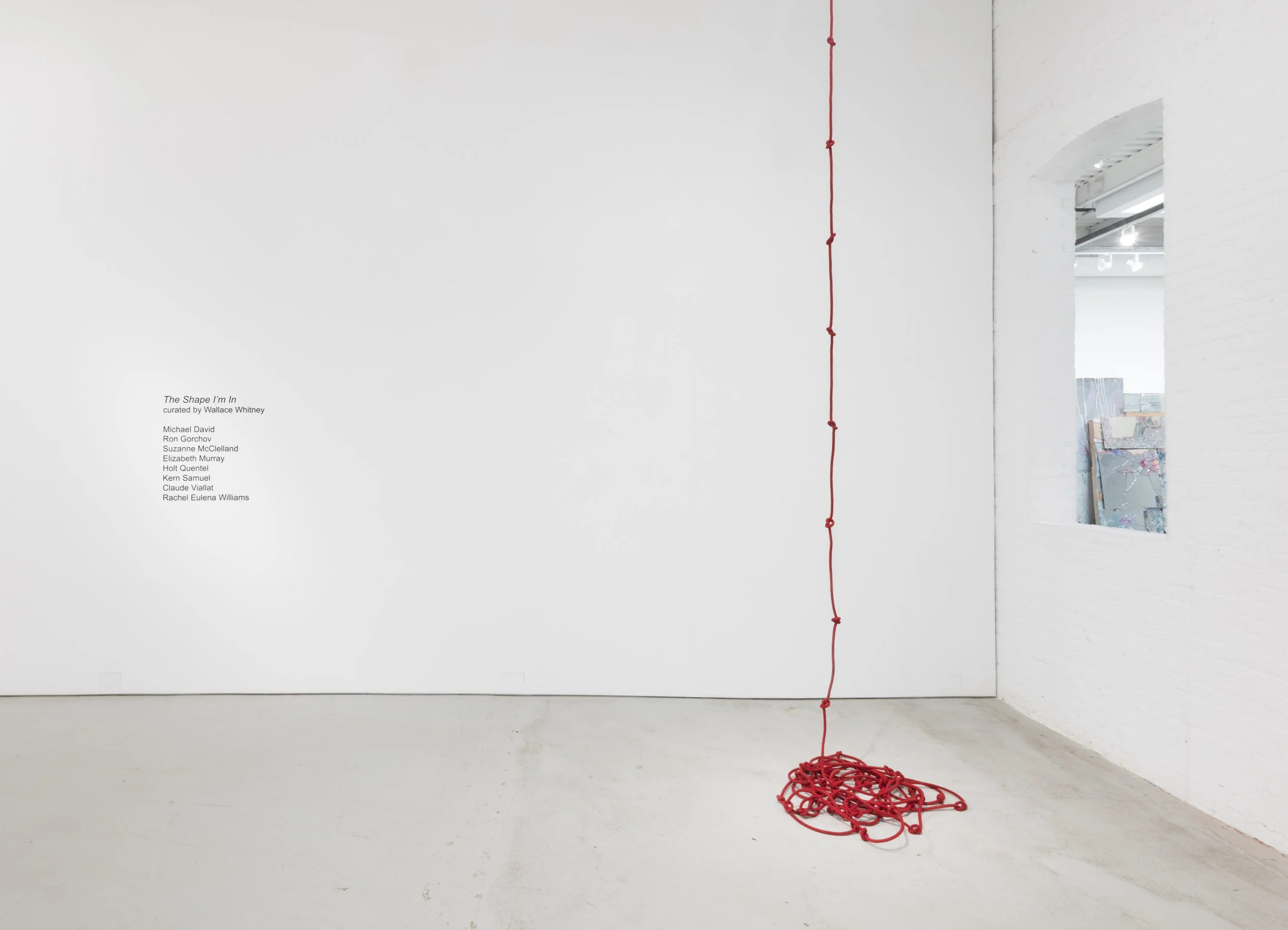
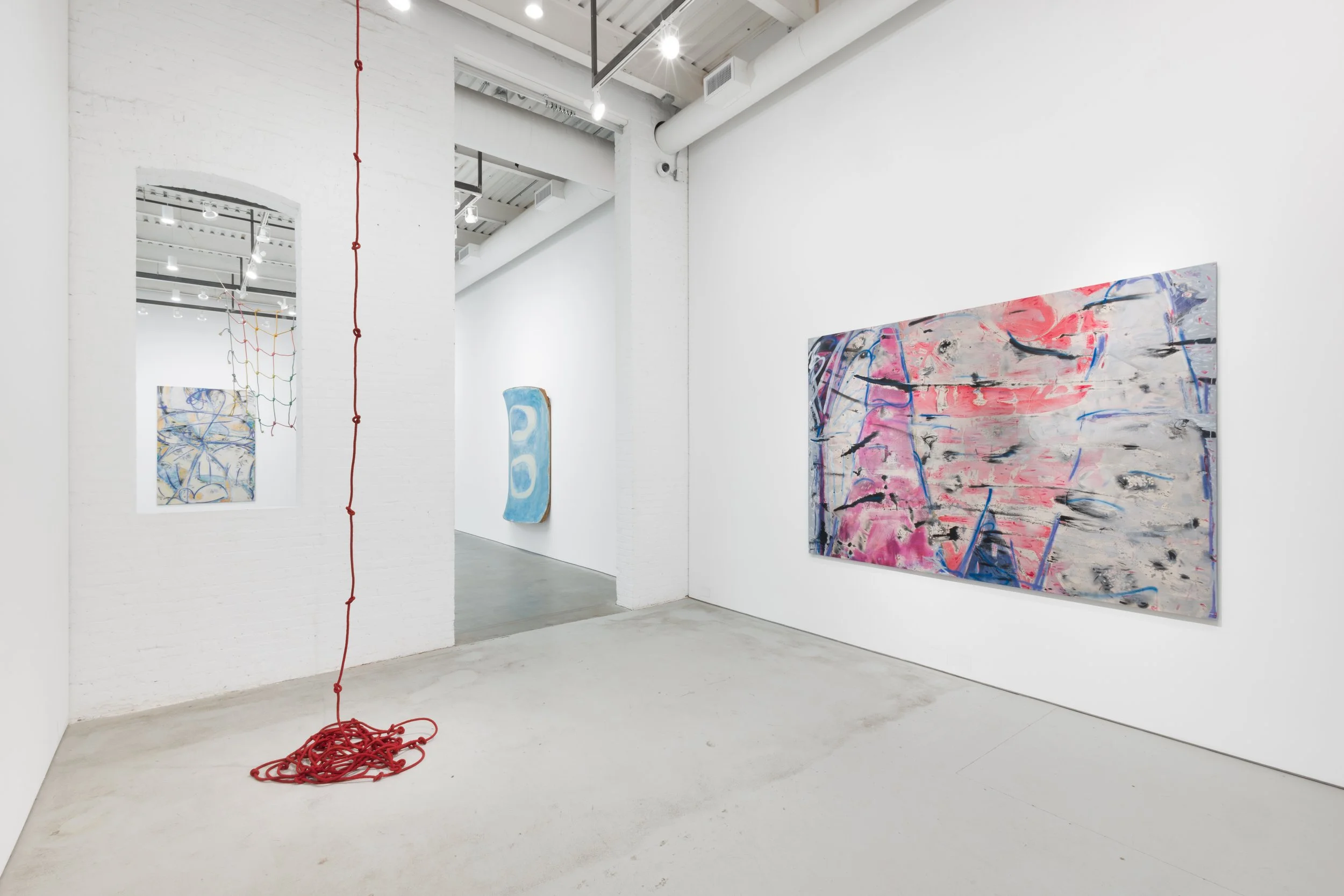
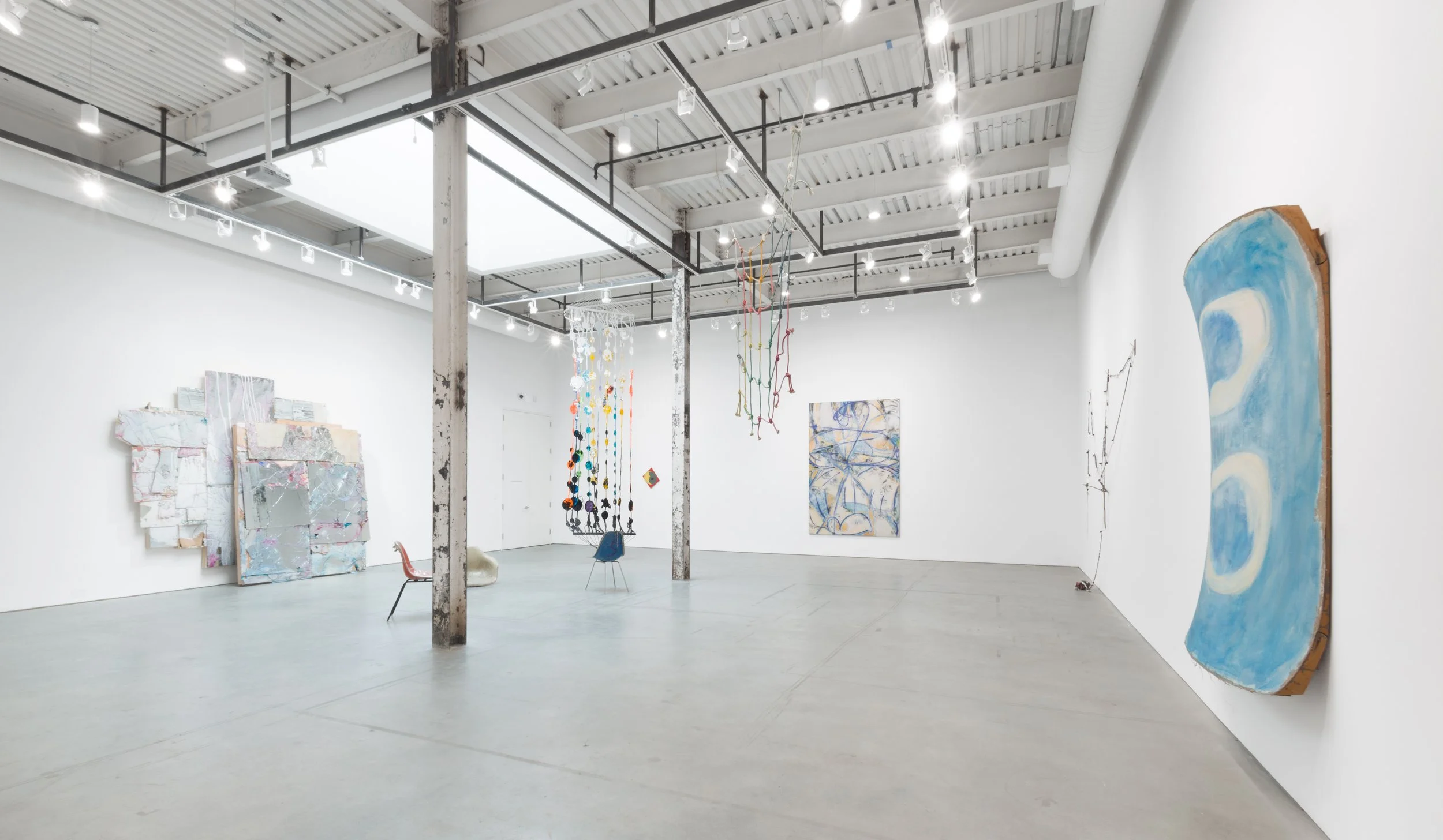
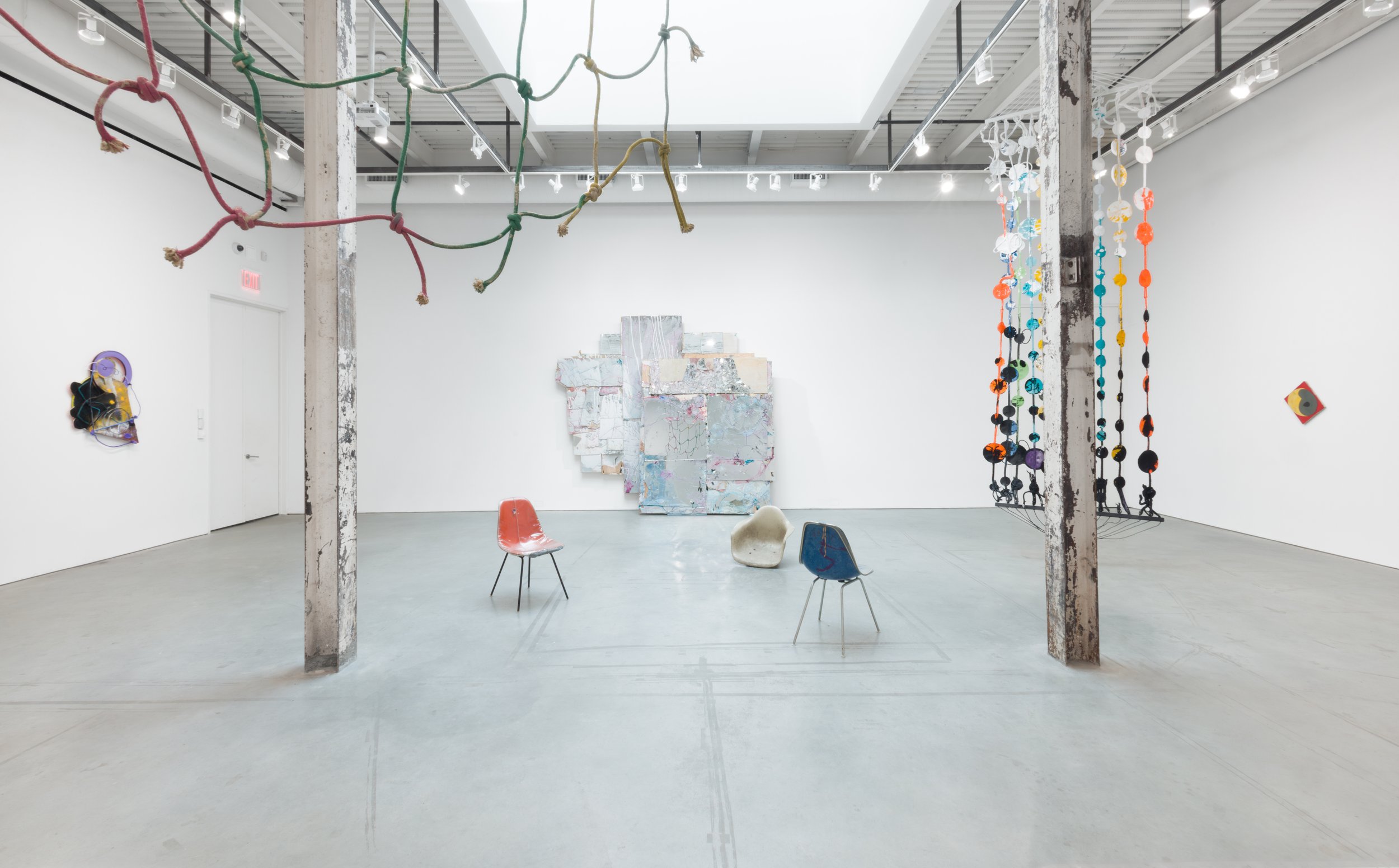
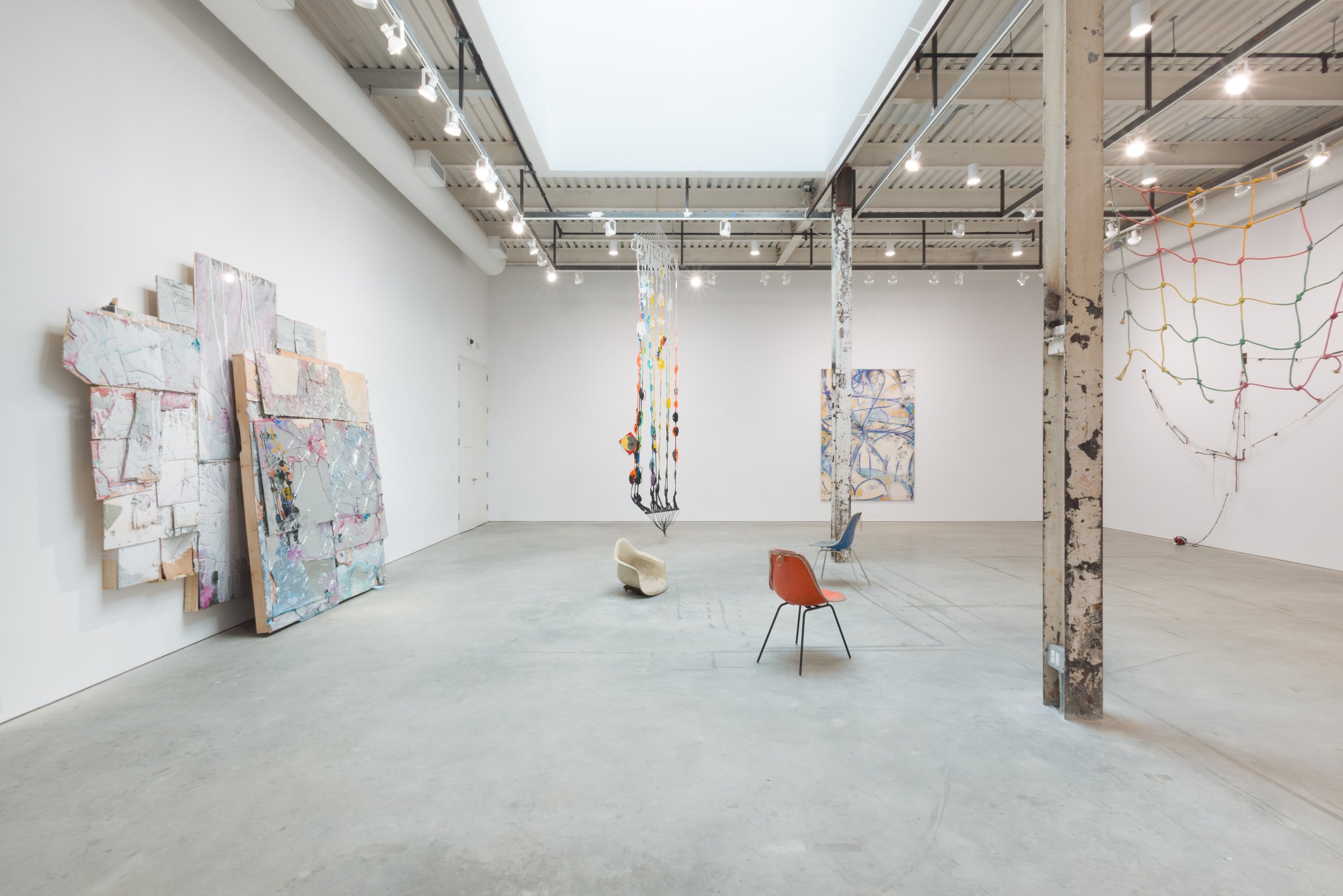
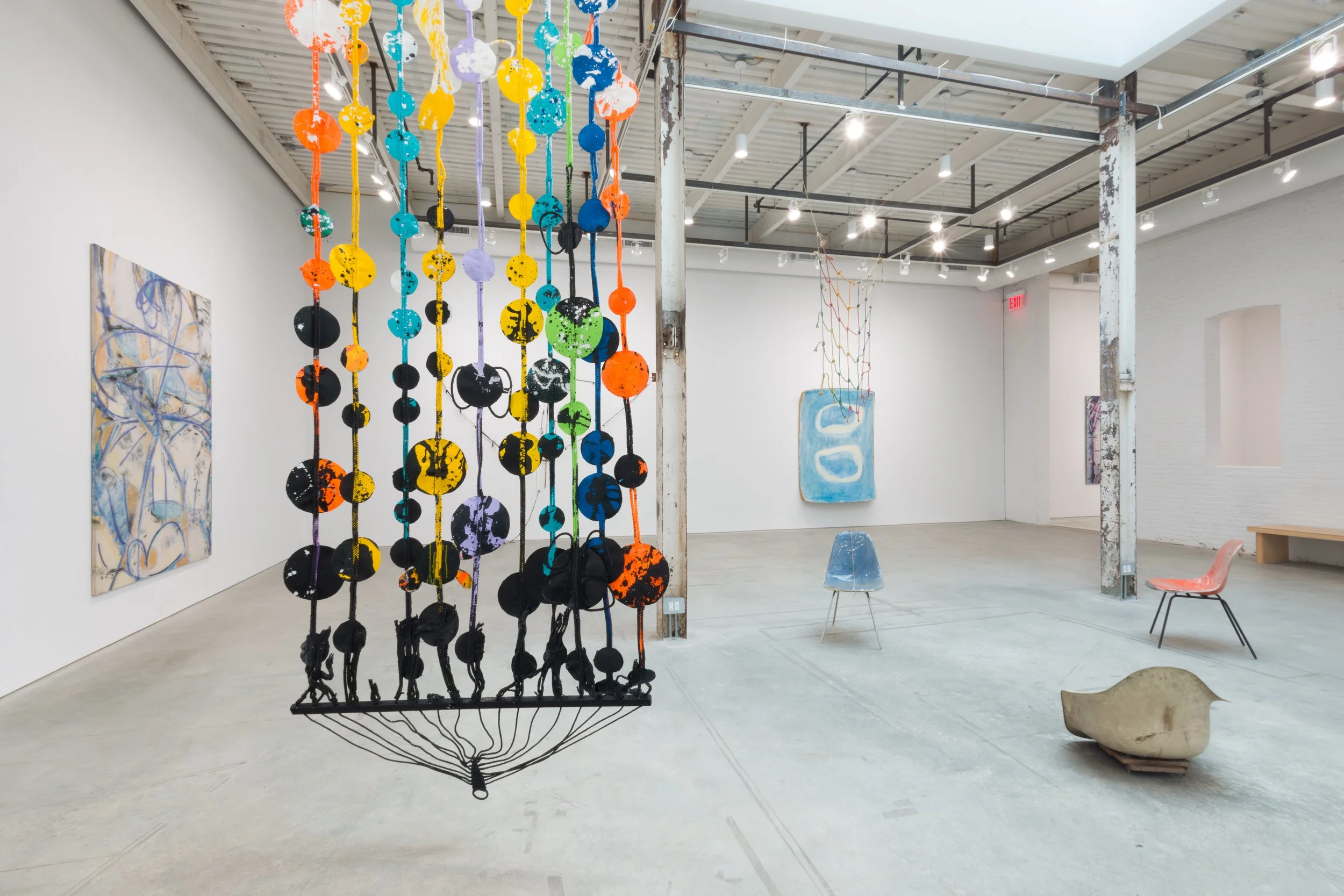
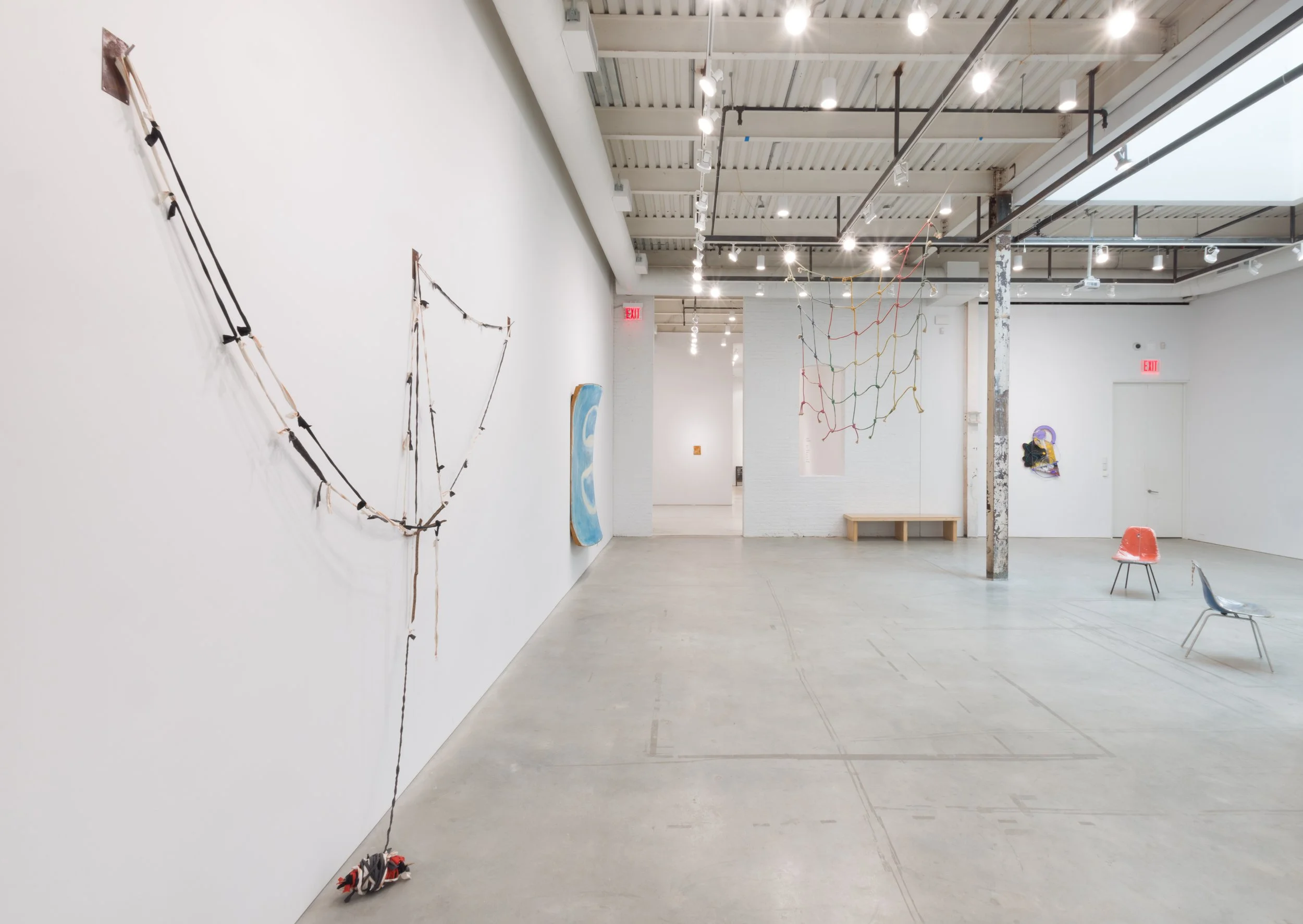
The Shape I’m In presents artists who start with painting and veer off, taking it to another place. Claude Viallat’s rope piece 1971/C14, 1971 and net 1975/FO28, 1975, are nods to the artisanal craftsmanship of his native region in the south of France and the conventions and structures of painting. The dyed rope has knots that are carefully and evenly spaced, for measurement, perhaps.
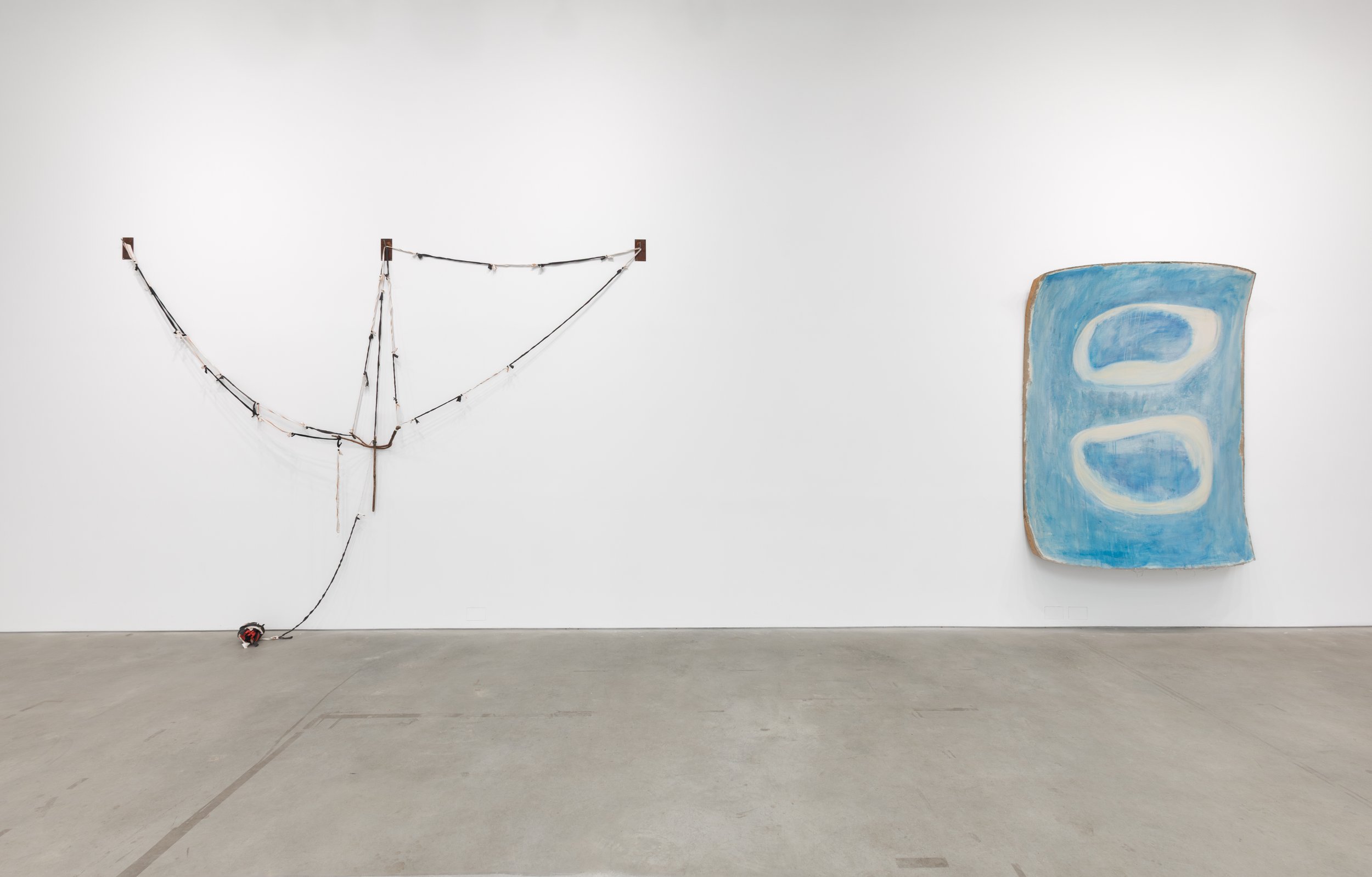
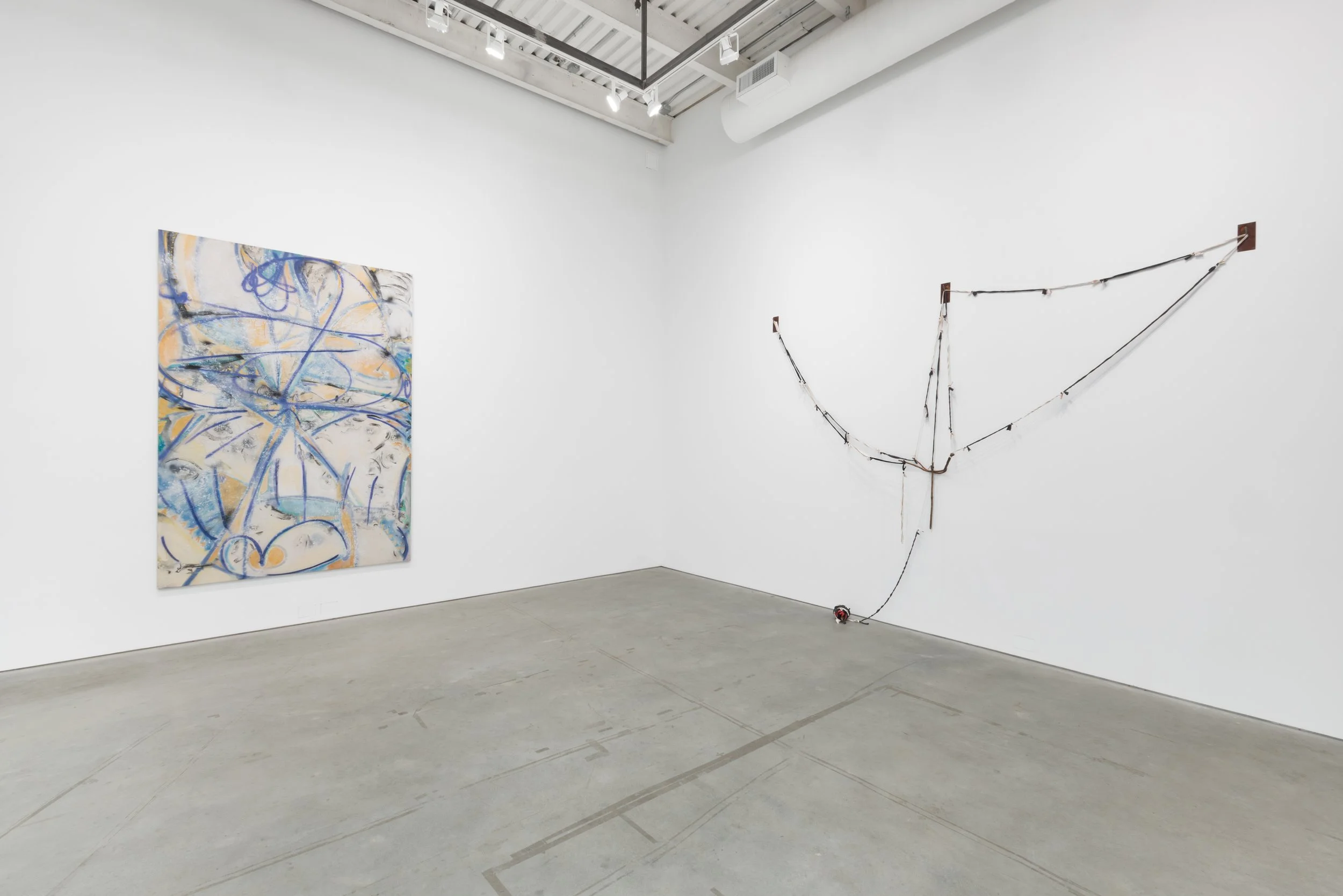
Kern Samuel’s Broken Column at once recalls Brancusi’s Endless Column while representing with tenderness the steel I-beams that a subway rider sees every day. Made from canvas and rust, Samuel’s I-beam is related to both natural processes and to painting. His Beavers Draw, Pigeons Paint anthropomorphizes the instinctual activities of beavers (chewing) and pigeons (shitting) by situating them inside the human habitat of art making.
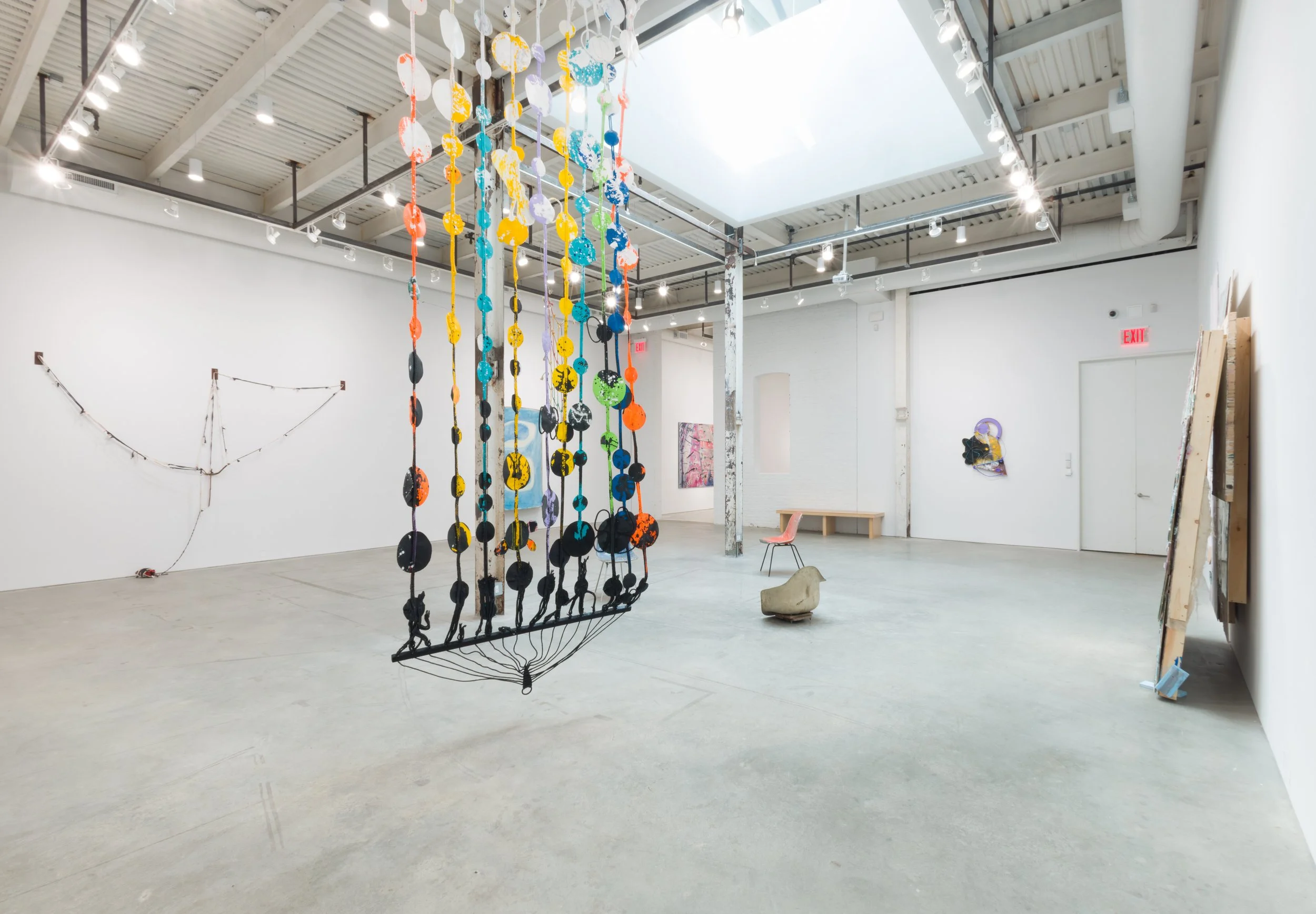
Rachel Williams’s exuberant abstract paintings are full of shapes and colors, often held together with rope that acts like a 3-D drawing technique. Williams is fond of buying used hammocks on ebay, like the ones used in Color Relaxer, 2024, which she cuts up and reimagines as mobiles activated by color and spaces that feel like the dreams of a midsummer napper.
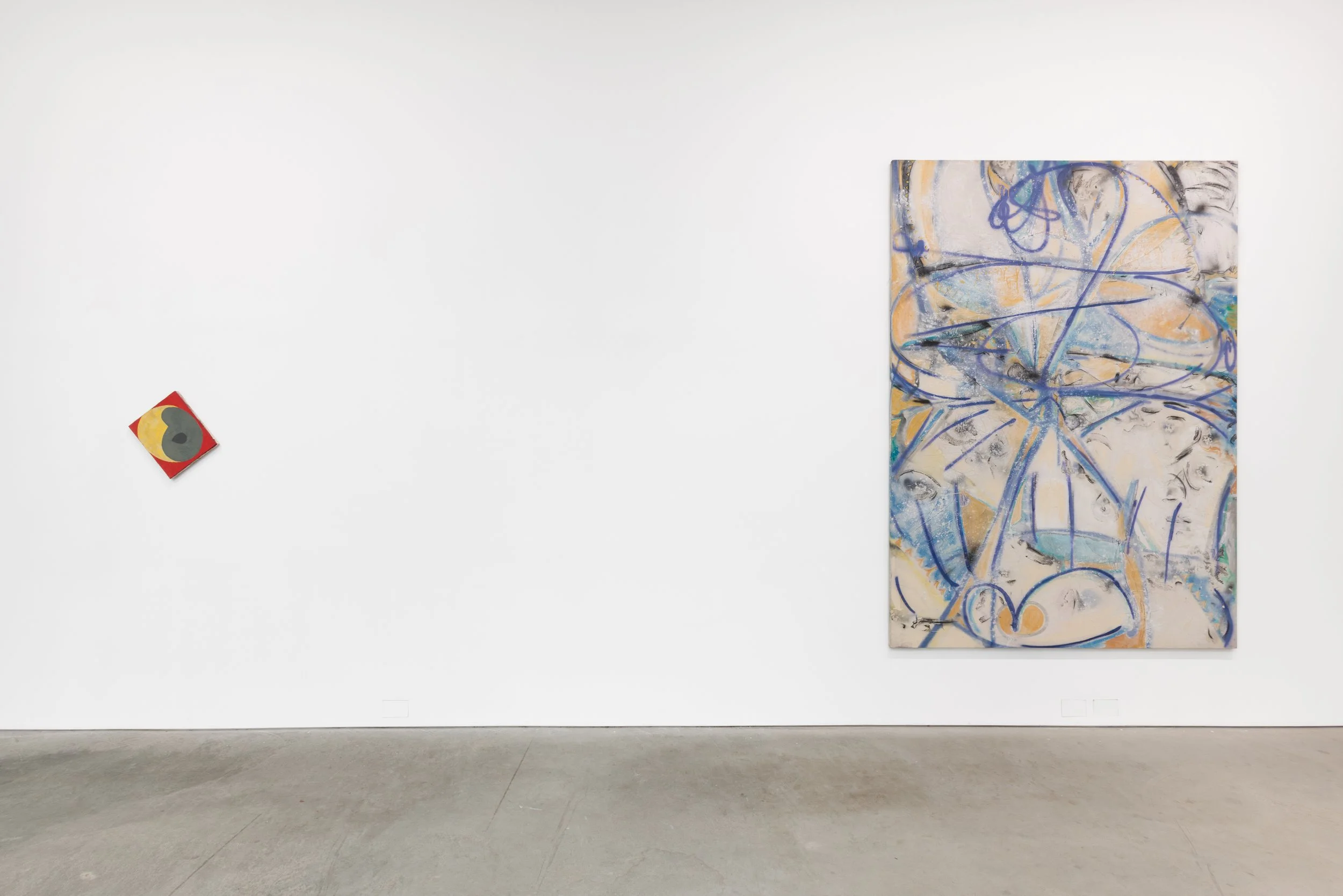
Elizabeth Murray’s muscular reinvention is certainly akin to Williams. Murray took painting out of the rectangle and gave her forms cartoony, mad-capped movement, bringing her paintings into lived physical space. Murray is represented here with an early painting from 1976 that has depth of color, elusive yet confident forms and assured painting handling that seems to predict her later experiments.
Holt Quentel once said, “give me two days and I can make something look forty years old”. She manufactured age, playfully tweaking viewer’s expectations with histories real or fictive, profound or spacey. Interested in the talismanic nature of objects, she selected an iconic modernist furniture piece, the Eames Chair, as her tabula rasa. The chairs have been fitted with distressed plastic slipcovers, stickers, tape and dirty patinas. Quentel’s “chairs” suggest narratives that are informed and complicated by social frameworks. They seem so natural, but on reflection one asks: what sort of person would make a slipcover for a mass-produced fiberglass chair?
Michael David builds his work from the inside out, shattering mirrors and gradually building on a shaggy grid format. The Book of Hours (First State), 2020-26 is a formal tour de force and, by virtue of the materials, a discomfiting self-portrait. The impulse of growth beyond the bounds of the rectangle often feels rooted in introspection and studio discovery.
Ron Gorchov was once asked why he paints on shaped canvases, he answered by recounting the story of a friend famous for only driving Rolls Royce automobiles who explained his preference by saying, “I drive a Rolls Royce because I can’t stand cars”.
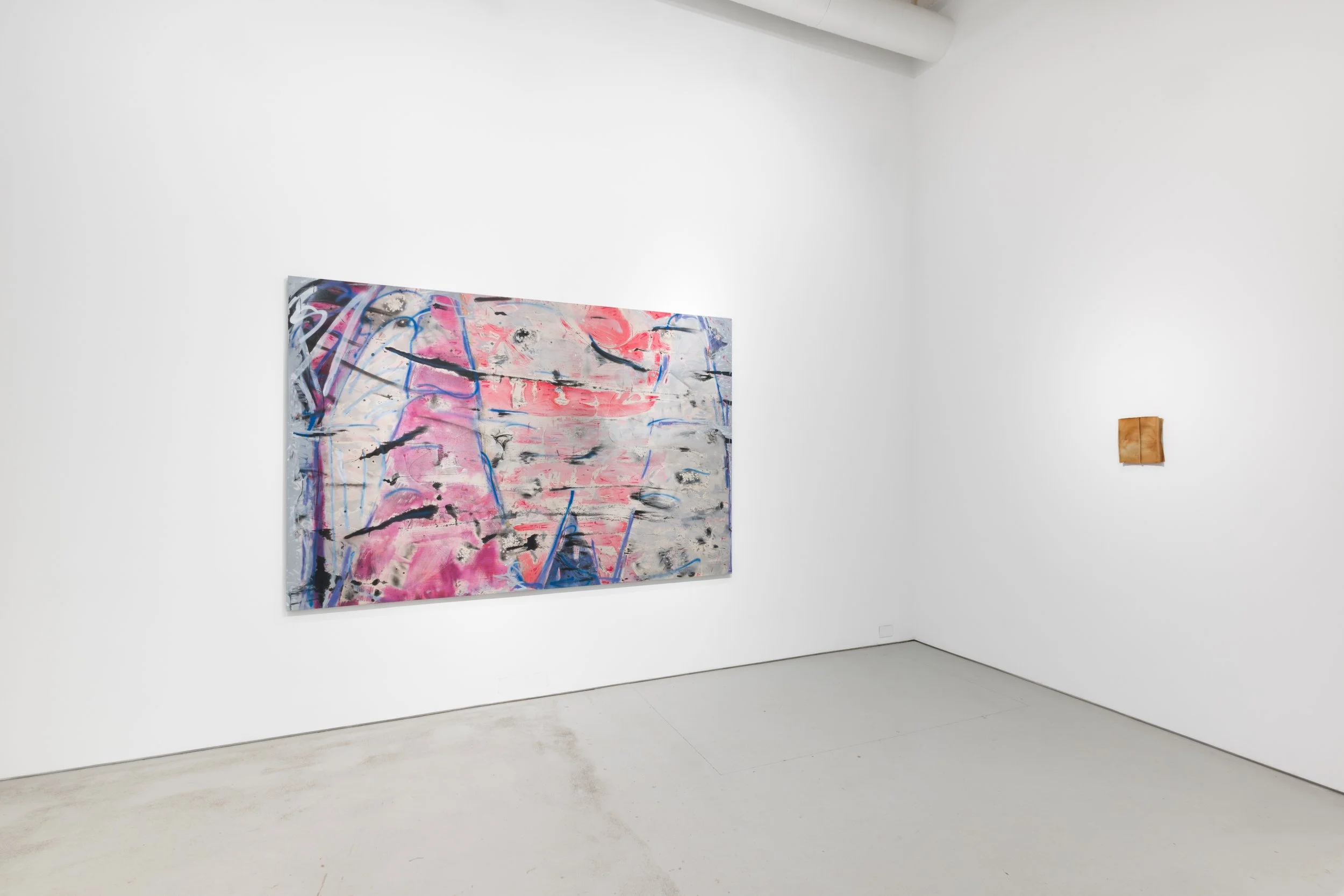
Finally, Suzanne McClelland’s paintings Away, 2025 and Beyond, 2025 are simultaneously pillowy and tough -- buoyant and lively but always cut with the melancholic angles of history.