
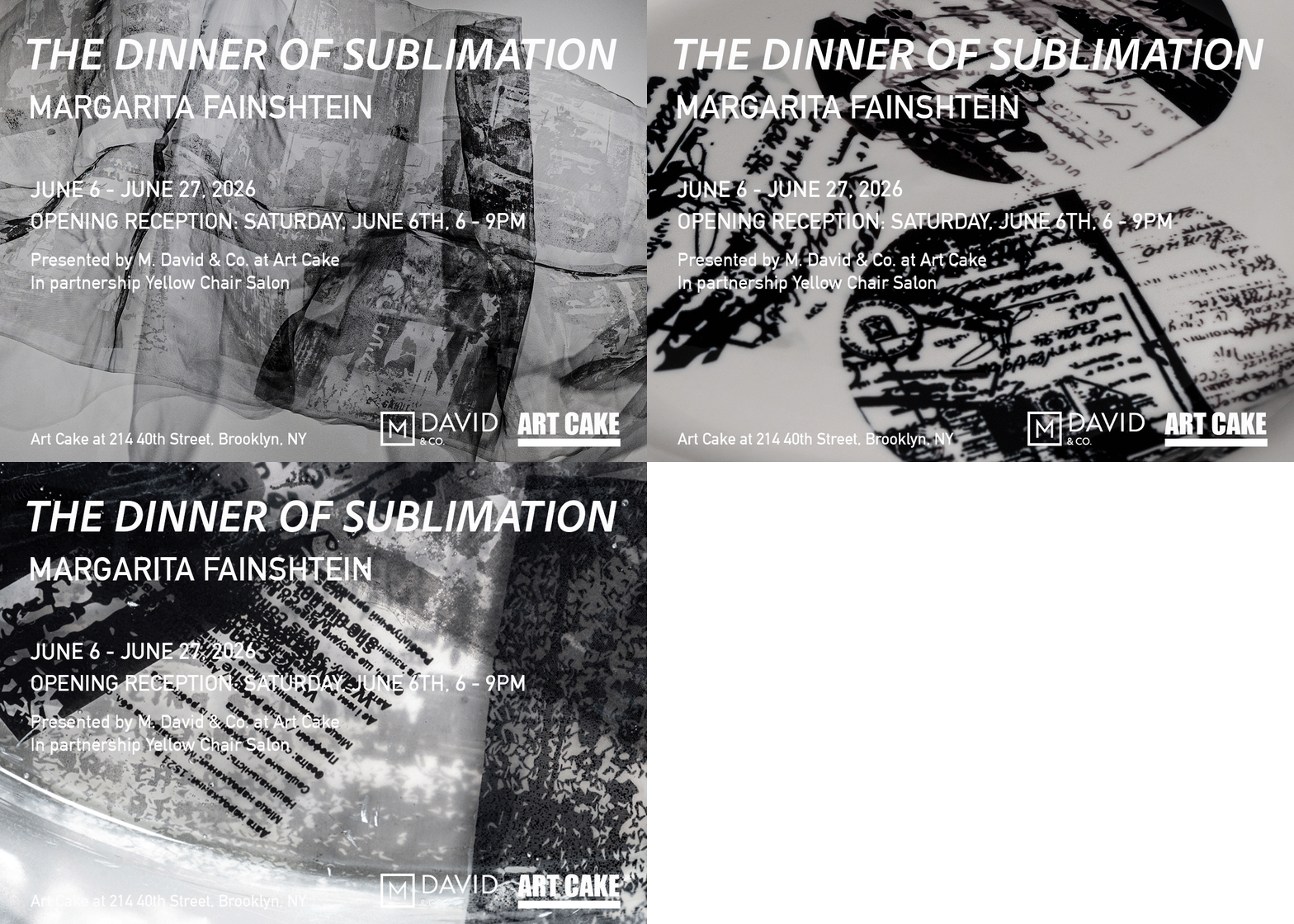
The Dinner of sublimation
Presented by M. David & Co. at Art Cake in partnership with Yellow Chair Salon
June 6 – June 27, 2026
Opening Reception: June 6, 2026, 6-9pm
Gallery B
Art Cake: 214 40th Street, Brooklyn, NY 11232
Hours: Friday & Saturday, 1-6 pm and by appointment
We’re thrilled to present The Dinner of Sublimation, an extraordinary installation by Margarita Fainshtein, opening this Saturday at Art Cake alongside Singing in Unison, Part 15: Gimme Shelter, presented by Rail Curatorial Projects and M. David & Co., and Selections from Symposia! presented by Yellow Chair Salon in Studio 10.
The Dinner of Sublimation is timely and deeply relevant on many levels—at once personal and universal. Margarita Fainshtein’s dedication, energy, and commitment to this project have been inspiring to me as an artist, educator, and curator.
Drawing on the sharing of family recipes as a living record of immigration and cultural memory—with a nod to Judy Chicago’s The Dinner Party—the installation combines sculptural, performative, and participatory elements. A communal meal on June 20 will activate the work, while an ongoing social media component invites contributions from a global audience, creating a continually evolving archive of recipes and stories.
Throughout the exhibition, visitors will be encouraged to participate by submitting a family recipe via QR code, contributing their own histories and traditions to the project.
The table itself, along with the artifacts that accompany it, is breathtaking. Together they stand as powerful works of art in their own right, independent of any narrative, while simultaneously deepening the stories they hold.
Please join us in celebrating the power of creativity and the shared language of ceremony, sustenance, memory, and shelter.
—Michael David
Margarita Fainshtein (b. 1982, Kherson, Ukraine) is an artist based in Halifax, Nova Scotia. She holds a BFA from the University of Haifa, Israel, and an MFA from the School of the Art Institute of Chicago. Her work has been exhibited at the Ukrainian Institute of Modern Art, Chicago; Chicago Art Department, Chicago; Art Gallery of Nova Scotia, Art Gallery of Acadia University, Nova Scotia; Halifax; Katzman Art Projects, Halifax; and venues across North America and Europe. Upcoming exhibitions include solo exhibitions at The Artist House, Jerusalem; Chester Art Centre, Nova Scotia, and Art Cake, New York. Her work is held in the permanent collections of Acadia University, Art Bank Nova Scotia, and the Art Institute of Chicago.